Why Did We Need Petőfi’s Call to Manliness?
Why did the Turkmen translation of a poem written in January 1847 by Sándor Petőfi—the Hungarian poet who urged his people to break the chains of servitude—suddenly transform into a unique rallying cry across Turkmenistan?
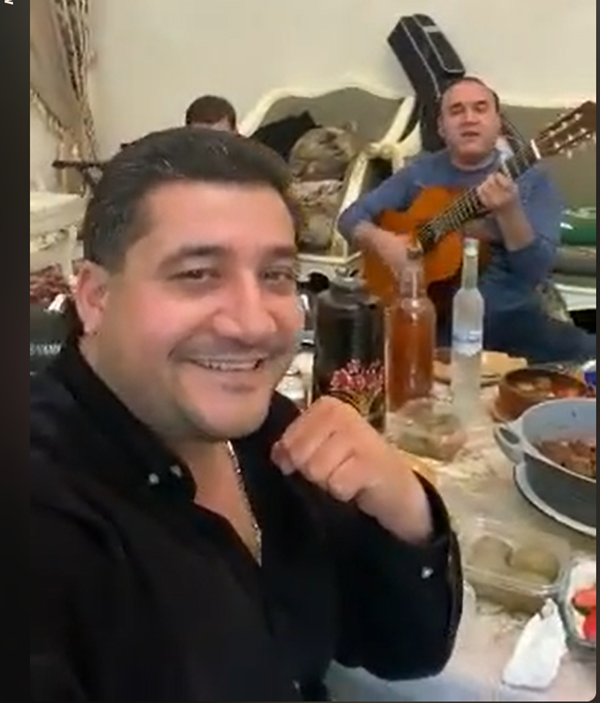
According to a local source speaking on condition of anonymity, wedding singers are now competing to perform a song composed by Joshgun Toylyyev, based on Petőfi's stirring verses—including the line likening fate to a bitch fleeing in terror from those who stare it straight in the eye.
On one hand, these singers eagerly embrace concepts of destiny; on the other, they tread carefully to avoid the regime's blacklists. Yet they race to perform the piece, both at lavish wedding banquets and at intimate gatherings.
Wealthy individuals reportedly pay performers handsomely to sing the piece at private gatherings before select circles of five to ten people. According to the source, while some listeners genuinely grasp the song’s call to valor, others merely feign understanding—showering singers with money simply to cultivate an image of themselves as men who honor courage.
"Just as our ancestors found the fortitude to defend their homeland through the songs of bards celebrating honor and bravery, today we desperately need music that calls on men to truly embody manhood. Performers are acutely aware of this demand; disheartened men often express profound gratitude—sometimes through tears—when they hear such songs," a young singer observed.
He noted that while many singers who churn out frivolous pop feel no remorse, others feel genuinely embarrassed by the superficial material they present to the public. Whenever a colleague performs a meaningful piece that strikes a chord with the audience, these artists immediately attempt to adopt the song into their own repertoires.
"It is true that many uneducated singers do not understand the lyrics they sing and care only about earning money. The term 'beautiful song' is thrown around casually these days, yet many label a track 'good' simply because it has a catchy tune—ignoring its sparse, uninspired lyrics and judging its quality solely by the crowd's reaction," our source remarked, adding that post-wedding conversations frequently revolve around how weddings are being overrun by overpaid, untalented performers.
"Music has become a mere commercial hustle for all sorts of vocalists, and vapid songs are exhausting the public. People already weary from daily hardships often complain, 'I go to a wedding and leave with an even worse headache—I simply cannot stand the singers' screaming.' Wedding singers know this sentiment all too well."
Observers note that artists mindful of their reputations and long-term careers have begun shifting toward songs that touch the heart and offer genuine solace.
Returning to Petőfi's poem, literary experts note that renowned poet Kerim Gurbannepesov produced a fine translation of the Hungarian classic on manhood—likely working from a Russian intermediary text—demonstrating his characteristic mastery as a translator.
It was no coincidence that Kerim Aga chose to translate such a poem during the twilight of the Soviet era. Whenever his original poems, translations, or articles were slated for publication, he would meticulously review the final page proofs before granting his sign-off, ensuring that not even a stray comma or misplaced period slipped through under his name. Yet, like many Soviet intellectuals of his generation, he was unready to confront the compromising, opportunistic stances forced upon them by the system; instead, he sought solace in reading this translation about courage to younger generations.
The literary generation of the 1980s understood the dilemma facing their mentors and refrained from harsh judgment. At the same time, however, most were focused on forging their own paths, acknowledging the older generation's shortcomings only when forced to do so.
To today's youth, that translation—undertaken by Kerim Aga either out of genuine creative conviction or, as some critics claimed, to maintain his "political standing"—feels like an original work of his own creation. Indeed, when singers explicitly announce "lyrics by Kerim Gurbannepesov" at the end of performances, they attribute the moral weight of the lyrics directly to the late poet.
One can certainly appreciate the artistic instinct of Joshgun Toylyyev, the young musician who unearthed this Soviet-era translation. Recognizing lines capable of stirring deeply buried emotions, he composed a resonant melody and delivered a compelling vocal performance.
"Listeners find it deeply moving; it is a powerful song," the source noted.
An Ashgabat-based literary critic highlighted a recent, noticeable surge in songs carrying overt protest themes, noting that verses centered on masculinity occupy a prominent place among the works of Turkmenistan’s guitar-playing musicians.
"As a rule, Turkmen authorities do not censor works that already passed Soviet-era censorship. Furthermore, officials operate under the assumption that few people pay close attention to song lyrics or view them as an actionable call to defiance. For this reason, protest music is likely to expand as daily life grows harder. Technological reality plays a role as well: the regime finds it increasingly difficult to silence the public simply because there are too many guitar-playing rebels to lock up," the critic explained.
Ironically, some Turkmens completely miss Petőfi's message. Whether by altering the text to insert religious platitudes like "submit to God," or by listening to the track at home while grandly declaring, "We are businessmen, figures of power, merchants—the very pillars of Turkmenistan! May God grant us honor during our brief time on Earth and grant us Paradise," they demonstrate online that they have entirely failed to grasp the revolutionary poet's words.
When compared to the English translation ("If You're a Man, Be a Man"), it becomes clear that Petőfi’s rallying cry would benefit from being translated directly into Turkmen by a new generation of poets.
When asked why a call to courage originally issued long before the historic battles of Gazawat and Geok Tepe has found such a powerful echo in modern Turkmen hearts, a man in his forties attributed the phenomenon to the rise of acoustic guitar culture and an emerging generation of young people seeking a new direction.
"Guitar musicians brought a fresh energy to Turkmen art, creating a demand for new melodies that spoke to what people were yearning for, even if they couldn't articulate it themselves. Kerim Aga's translation turned out to be precisely what they were seeking," observed a Turkmen living abroad.
"The past thirty-five years have witnessed a profound crisis of masculinity among Turkmen men. Tens of thousands spent decades living off the grueling labor of women and young girls while surrendering themselves to opium, heroin, vodka, cigarettes, and nas—all while taking out their frustrations on their struggling families."
According to him, the crisis of masculinity in Turkmen society deepened over generations through a relentless series of historical tragedies: the mass slaughter of men—and the adolescents who would have become men—during the fight against invading Tsarist forces; the brutal reprisals against those who joined the 1916 anti-colonial uprising or resisted forced collectivization; the devastating Stalinist purges of 1937–38; and the staggering loss of life during World War II.
"Moscow’s primary demand of the leadership in Ashgabat was meeting cotton production quotas. Consequently, it became routine for schoolchildren—especially young girls—and mothers with infants to toil in the fields from dawn to dusk. Meanwhile, an increasing number of parents bribed their way into securing university admissions for their unqualified children. Armed with unearned diplomas, these individuals went on to occupy various government posts, focusing solely on lining their own pockets—a culture of corruption that persists to this day. Anyone who dares to speak out against this reality is instantly branded an enemy of the state rather than a patriot," he observed.